I was delighted to find out recently that Solway Blankets – a fellow family run Dumfries & Galloway business that specialises in British-made wool blankets - named one of their plaid wool blankets ‘Kirkennan’.
We chose blankets from Solway Blankets to use in our holiday cottages as they reflect our shared values around sustainability, natural materials and supporting local businesses. We have had three of their blankets in The Lodge for a number of years. Having just discovered the ‘Kirkennan’ blanket I have had to buy one each for The Mews and Woodsedge.
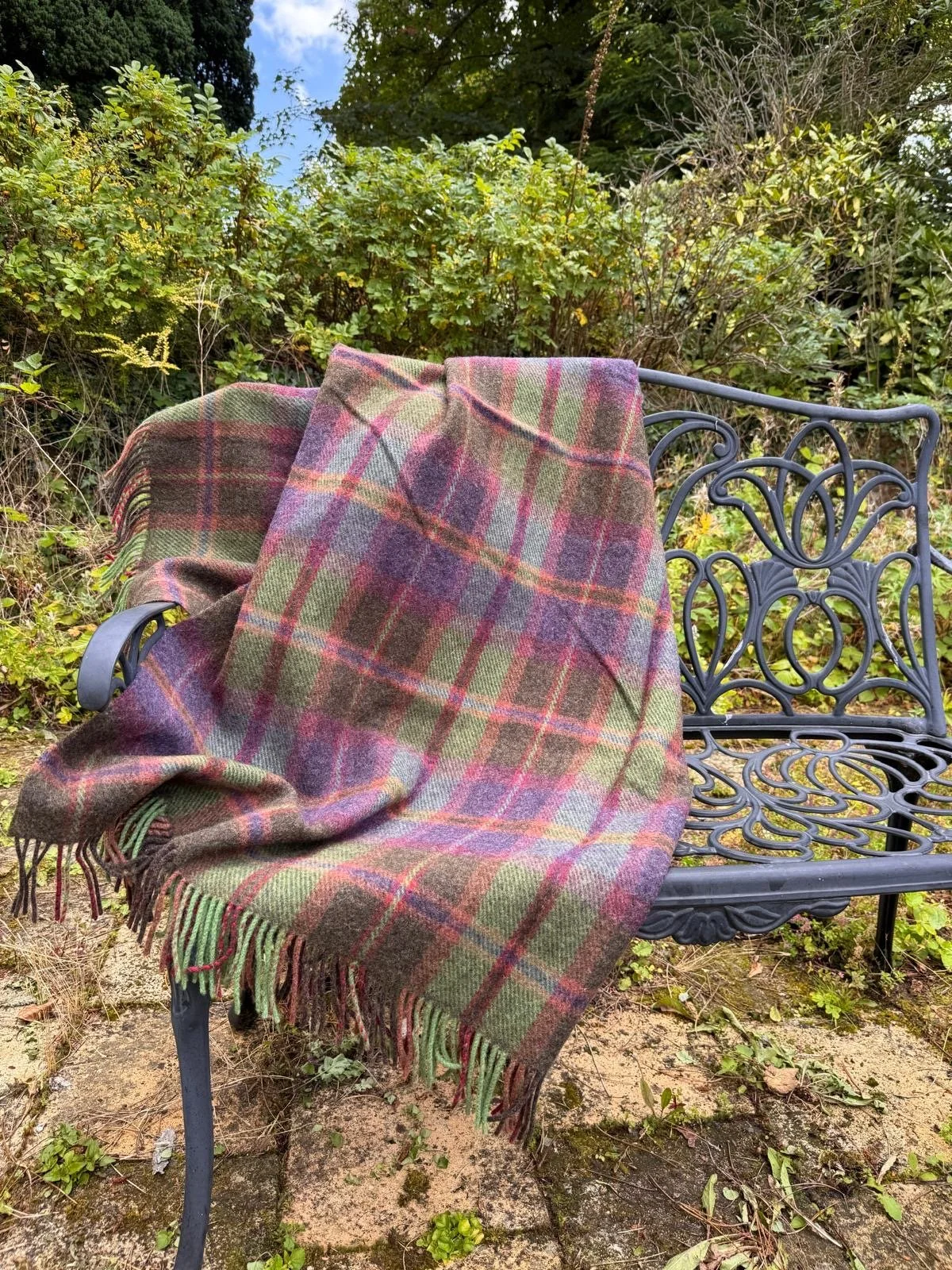
‘Kirkennan’ is my absolute favourite blanket on the whole Solway Blanket website being a beautiful mix of gentle greens and purples which is very evocative of the local landscape. Victoria Lane of Solway Blankets told me she chose the name ‘Kirkennan’ as she felt it represented the local area. This got me doing a bit of hunting to find out where the name Kirkennan comes from.
Meaning of Kirkennan
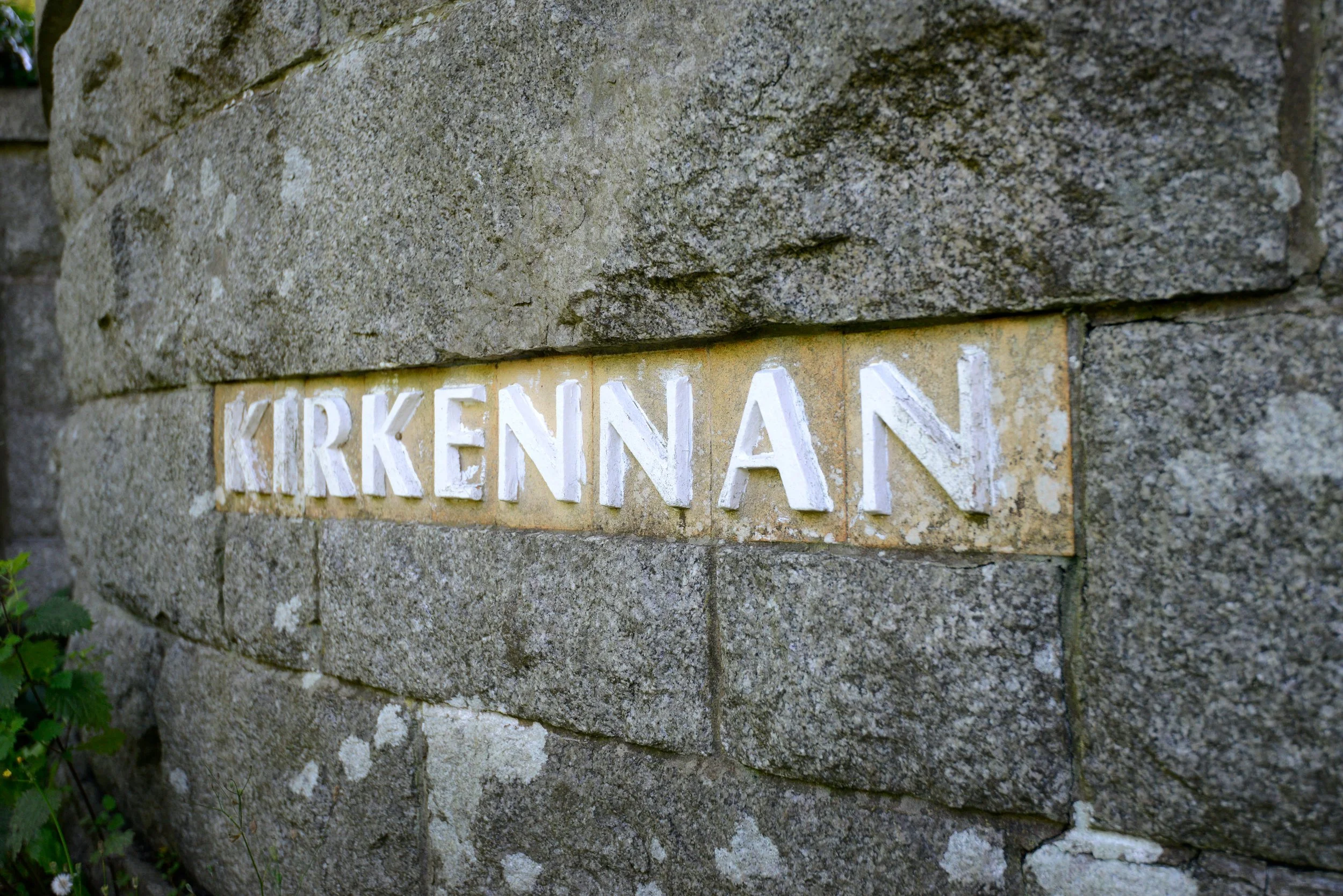
Kirkennan literally means ‘The Church of St Inan’ and refers to a medieval church that used to stand near the current Kirkennan Estate. It was in existence well before 1347 when it appears in historical church records as being granted to the monks of the nearby Sweetheart Abbey. The transfer was disputed, suggesting the church and associated lands were deemed to be of some value, and did not actually take place till 1381.
Who was St Inan?
St. Inan (also known as Uinniau, Evan, Innan and Ennen) is said to be 9th Century monk and preacher from Iona. He supposedly visited Rome and Jerusalem before settling as a hermit in Irvine in Ayrshire – about 70 miles from Kirkennan. There is however no clear historical record of him and there is an increasing consensus that St Inan is just another name for the much earlier Saint Ninian.
St Ninian was a Celt born in either Southern Scotland or Cumbria, probably to a Christian family. He studied in Rome and on his return became the first known Christian missionary in Scotland, founding a mission at or near Whithorn in AD397 which would become an important site for Christian pilgrimage. Whithorn can easily be visited on a day trip from Kirkennan and has a very interesting visitor centre where you can find out everything that is known about St. Ninian [The Whithorn Trust Come Close, See Far].
St. Ninian preached throughout Galloway and beyond. Numerous parish churches dedicated to St. Ninian are said to be scattered all over southern Scotland; nearly all of them being more than 1000 years old and traditionally thought to be congregations founded by him [Ninian of Galloway, Bishop, Missionary To Scotland]. St. Ninian’s easiest form of transport would have been by sea. Kirkennan, about 30 nautical miles from The Isle of Whithorn, would have a been reachable in only a few hours with the tide in the right direction. It is nice to imagine that St Ninian once sailed up the Urr to preach in the local area and inspired a church to be built at Kirkennan. Once the congregation was established he might have visited the church periodically.
Why did the church vanish?
Sometime before 1560 the parishes of Kirkennan and Buittle were amalgamated and Buittle Church became the dominant church. The church of Kirkennan was left unused and, as was normal at that time, the stones would have been recycled into new buildings and structures, leaving nothing visible on the surface. Some sources suggest that the stones were used to build the stable block at Kirkennan.
Where exactly was the church?
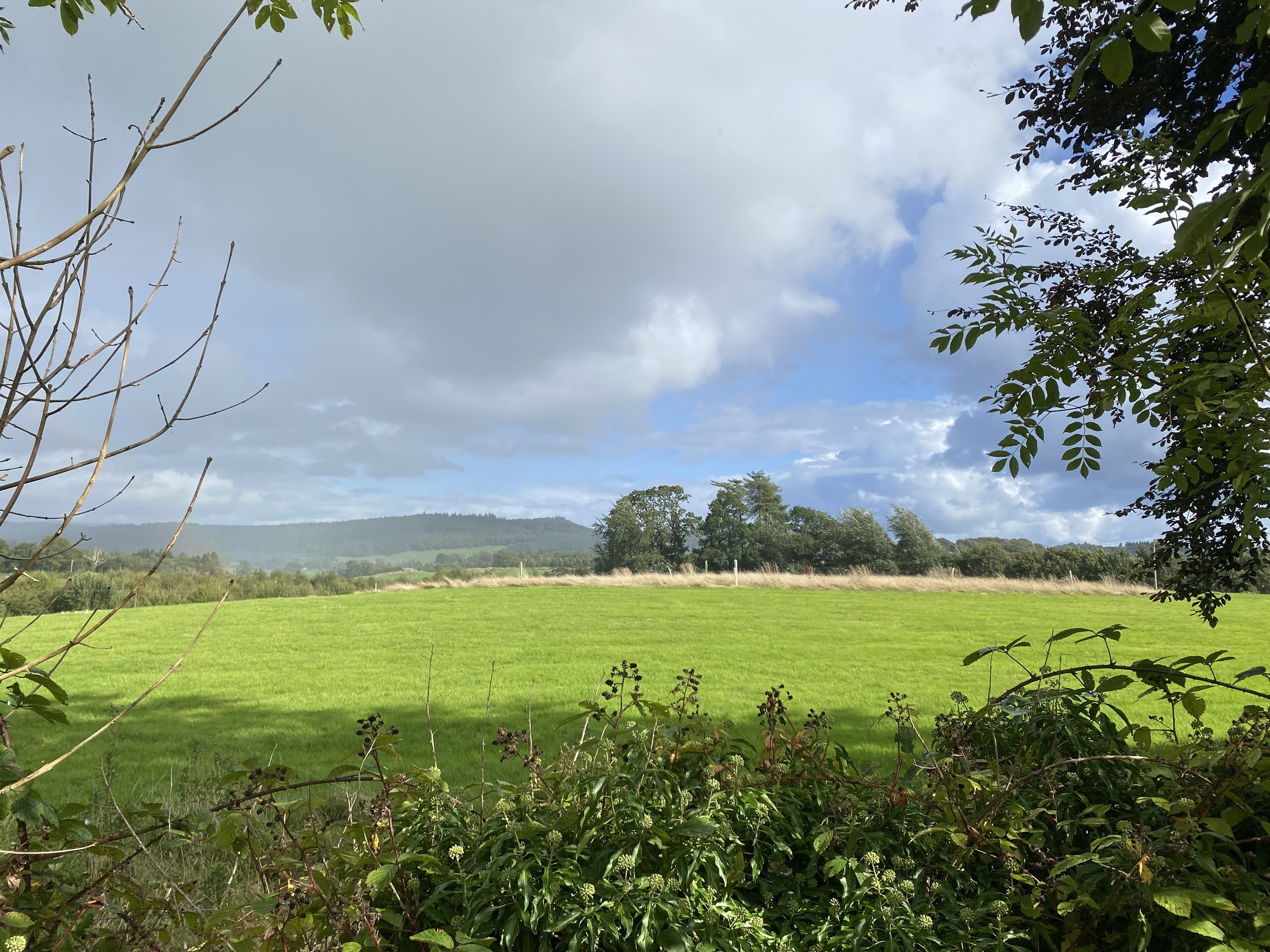
The site of ‘Kirkennan Church and Graveyard’ is marked on old maps but there is no sign of it now. The Ordinance Survey map of 1854 shows it sited within the current Estate boundary in the far field between Kirkennan Cottage and the River Urr. Other maps show it on the other side of the road. I like to imagine it on top of the small area of raised ground overlooking the river. The graveyard would have extended beyond the church and there are reports that fragments of coffins were found when working on the road in the 19th Century.
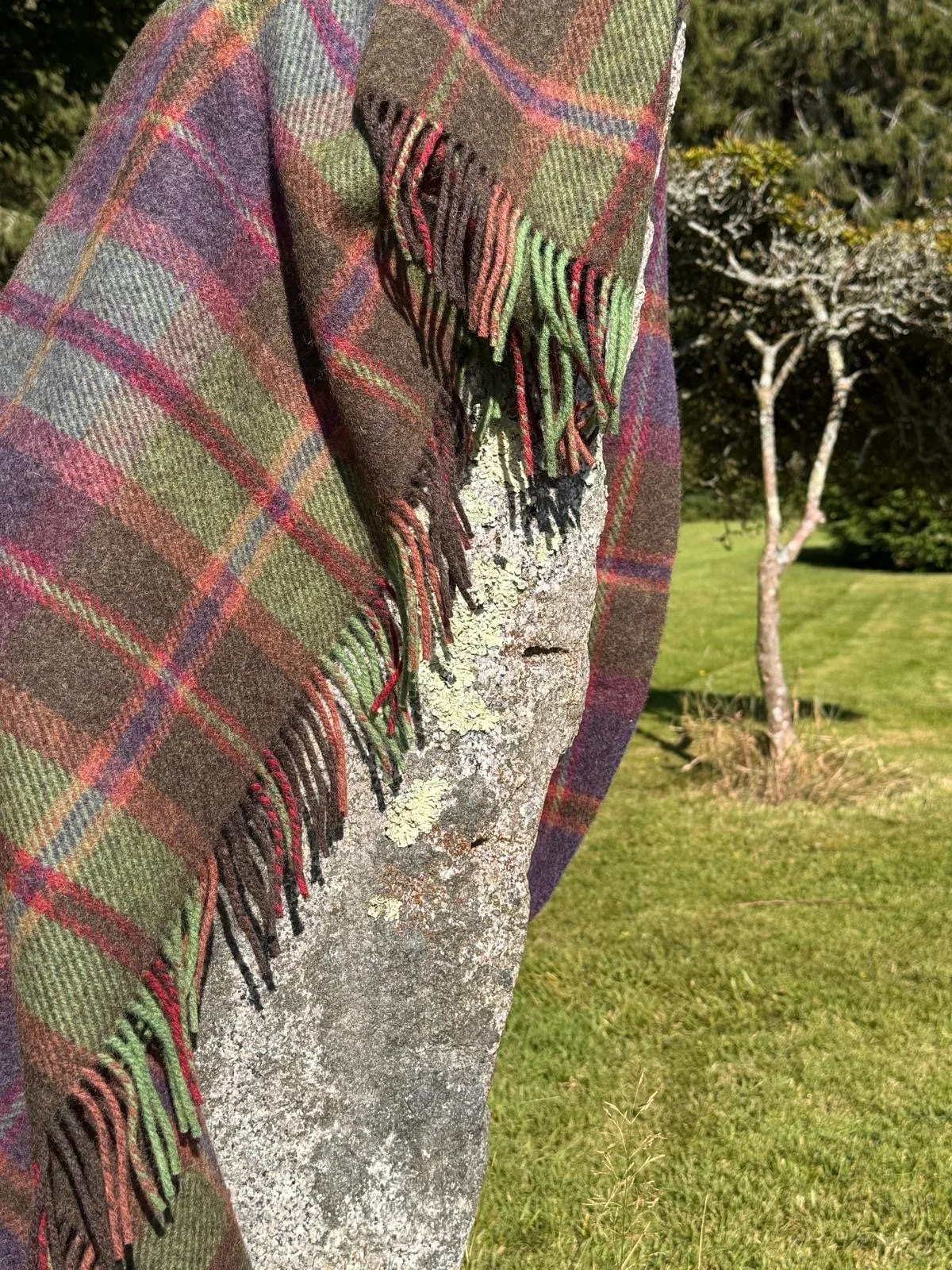
The Kirkennan Blanket
Solway Blankets describe the Kirkennan plaid blanket as:
‘Rich, inviting and luxurious shades of mossy and lichen greens, deep purples and pinks with touches of terracotta and burnt umber emulate the natural tones and hues of the mountains, moors, lochs, woodlands, coastal, river and farmland of our region.’
This description wonderfully evokes the beauty of Kirkennan’s lands in the current day with the river Urr, the woodlands and fields. But I like to think that the colours of the blanket also give just a hint of a time gone by; a place where lichen and moss covered stones can be found that once formed the structure of a simple church built by a congregation inspired by Scotland’s first missionary, Saint Ninian.
Kirkennan Pastel Plaid Wool Blanket | Pure Wool Throw UK – Solway Blankets